
Infrared Thermal Imaging Inspections
Non-invasive inspection for moisture, energy loss and electrical hot spots
“Tony is amazing! He is professional, responsive, knowledgeable, and very detail oriented. Tony and his team worked together with me step by step on a bathroom demolition & complete remodel which turned out perfect.”
Read full review1st Action Restoration's advanced equipment helps to detect hidden moisture, extract standing water quickly, and thoroughly clean and dry your home and belongings.
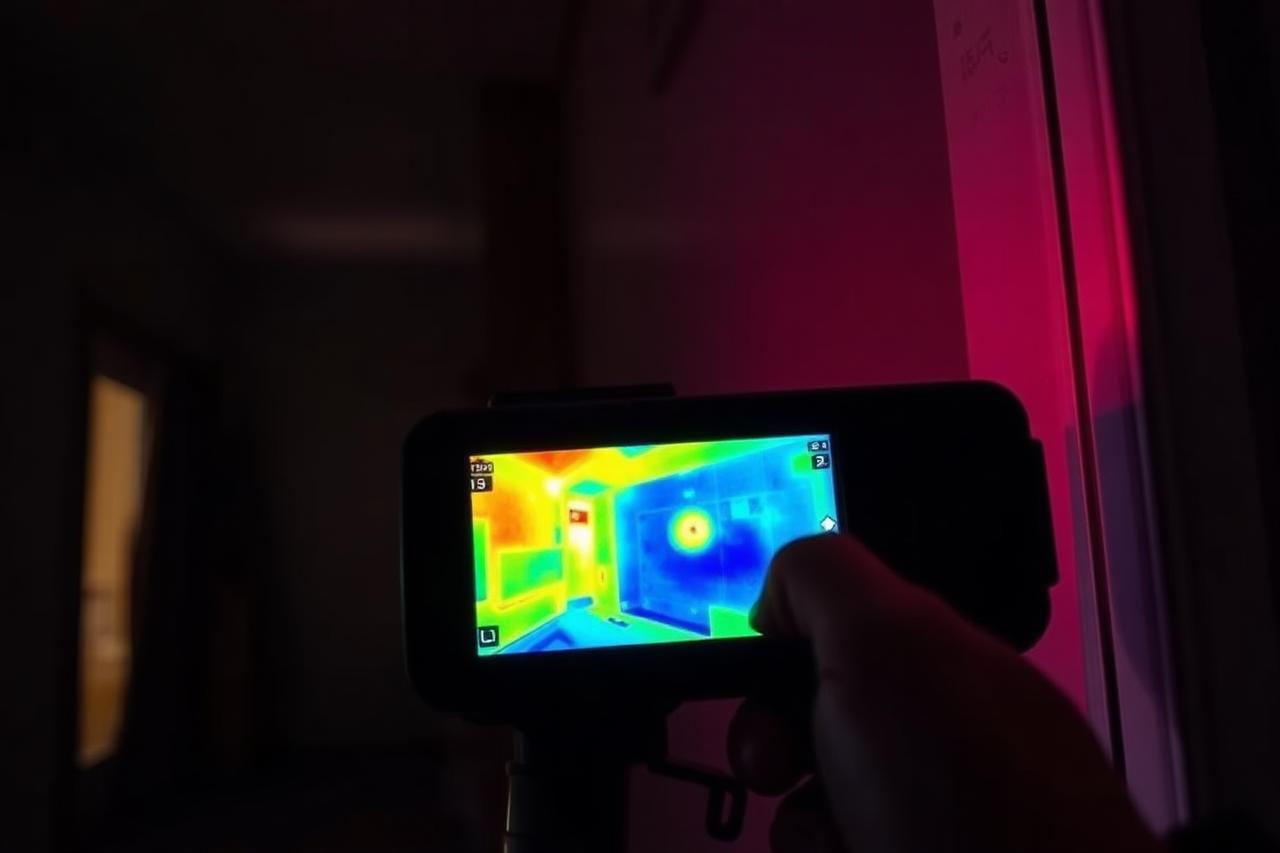
Infrared imaging reads surface temperature differences, which lets us map where water has traveled inside a wall cavity, under a floor or across a ceiling before anything is opened up. Less guessing means less demolition and a smaller claim.
What thermal imaging finds
- Hidden moisture inside wall and ceiling cavities
- Slab leaks and leaking supply lines
- Wind-driven roof and window leaks
- Missing or wet insulation
- The true extent of a loss, verified with moisture meters
Documented for your claim
Every thermal scan is paired with meter readings and photographs so there is a record of what was wet, where, and on what date. That documentation is what carriers rely on when a scope is questioned.
Infrared thermal imaging is a non-invasive inspection technology that reveals temperature differences and conditions that are difficult or impossible to identify with a conventional visual inspection alone.
The value of an infrared inspection is not the thermal photograph itself. It comes from interpreting the thermal data and using it to identify the areas of a building that may require additional investigation or repair — before anything is opened up unnecessarily.
Moisture intrusion
This is where thermal imaging connects most directly to restoration work. Temperature patterns may indicate moisture associated with:
Plumbing leaks
Supply and drain line leaks inside walls, ceilings and under flooring.
Concealed roof leaks
Water travelling from a roof penetration well away from the visible stain.
Wet or damaged insulation
Saturated insulation that holds moisture against framing and drywall.
Building penetrations
Moisture around windows, doors, vents and other envelope penetrations.
Foundation and envelope moisture
Moisture patterns at slabs, foundations and exterior wall assemblies.
Conditions behind damage
Water intrusion that may contribute to structural damage or mold growth if left untreated.
Energy loss
An infrared inspection can also help identify comfort and efficiency problems, including:
- Heat loss
- Air infiltration
- Issues at walls, ceilings and floors
- Issues around windows and doors
- Compromised insulation
- Radiant heating problems
- Possible HVAC-related temperature anomalies
- Failed seals in double-pane windows
Electrical hot spots
Thermal imaging may identify abnormal temperature conditions associated with overheating electrical components, overloaded circuits, undersized circuits, circuit breaker problems and other abnormal electrical hot spots.
Infrared identifies the abnormal heat pattern — it does not replace evaluation by a qualified electrician. Anything found this way should be further evaluated before conclusions are drawn.
Other conditions worth investigating
Thermal patterns can also point toward conditions inside concealed areas. These are potential indicators, not guaranteed diagnoses:
- Structural irregularities
- Possible pest activity
- Flue problems
- Unusual heat signatures within concealed areas
Thermal imaging reports
Useful infrared reporting combines standard digital photographs with the corresponding infrared images. The photograph gives the property owner a recognizable visual reference; the thermal image shows the temperature pattern in the same place.
The objective of the report is practical: provide information that helps determine where further investigation or repair may be appropriate, and give an insurance carrier a dated record of the conditions observed.
Interpreting thermal images
Interpretation is the critical part of the process. Thermal imaging does not predict future conditions and should not be presented as automatically diagnosing every building problem.
The same temperature pattern may indicate missing insulation, moisture, air leakage — or something that warrants more urgent investigation. Readings are confirmed with moisture meters and, where needed, further inspection, before a scope of work is written.
Frequently asked questions
- Does thermal imaging see through walls?
- No. An infrared camera reads surface temperature. It shows patterns on the surface that may be caused by conditions behind it, which is why readings are verified with moisture meters or further inspection.
- Is the inspection invasive?
- The scan itself is non-invasive. It is often used specifically to narrow down where — and whether — anything needs to be opened up.
- Can a thermal scan confirm mold?
- No. Thermal imaging can help locate moisture conditions that may contribute to mold growth. Confirming mold requires inspection and testing.
Where we provide this service
100+ cities within a 60-mile radius of our Mission Viejo office, all covered by the same 24/7 dispatch.
Full coverage map“We called 1st Action, because we had a leak and weren't sure where it was coming from. Tony removed the wall, flooring and found a burst pipe in the washer machine area. He went back and forth with our insurance company trying to get us more money. They wanted to pay us $14k initially for the hardwood floors to be sanded and stained. Tony…”
Concerned about hidden moisture?
Request a thermal imaging inspection and we will tell you what the readings actually show.
CA License #B-902225 · IICRC #193237 · Serving SoCal since 2007